Sunday, January 25, 2009

AoA for Octavian Athanasiou of Constantinople

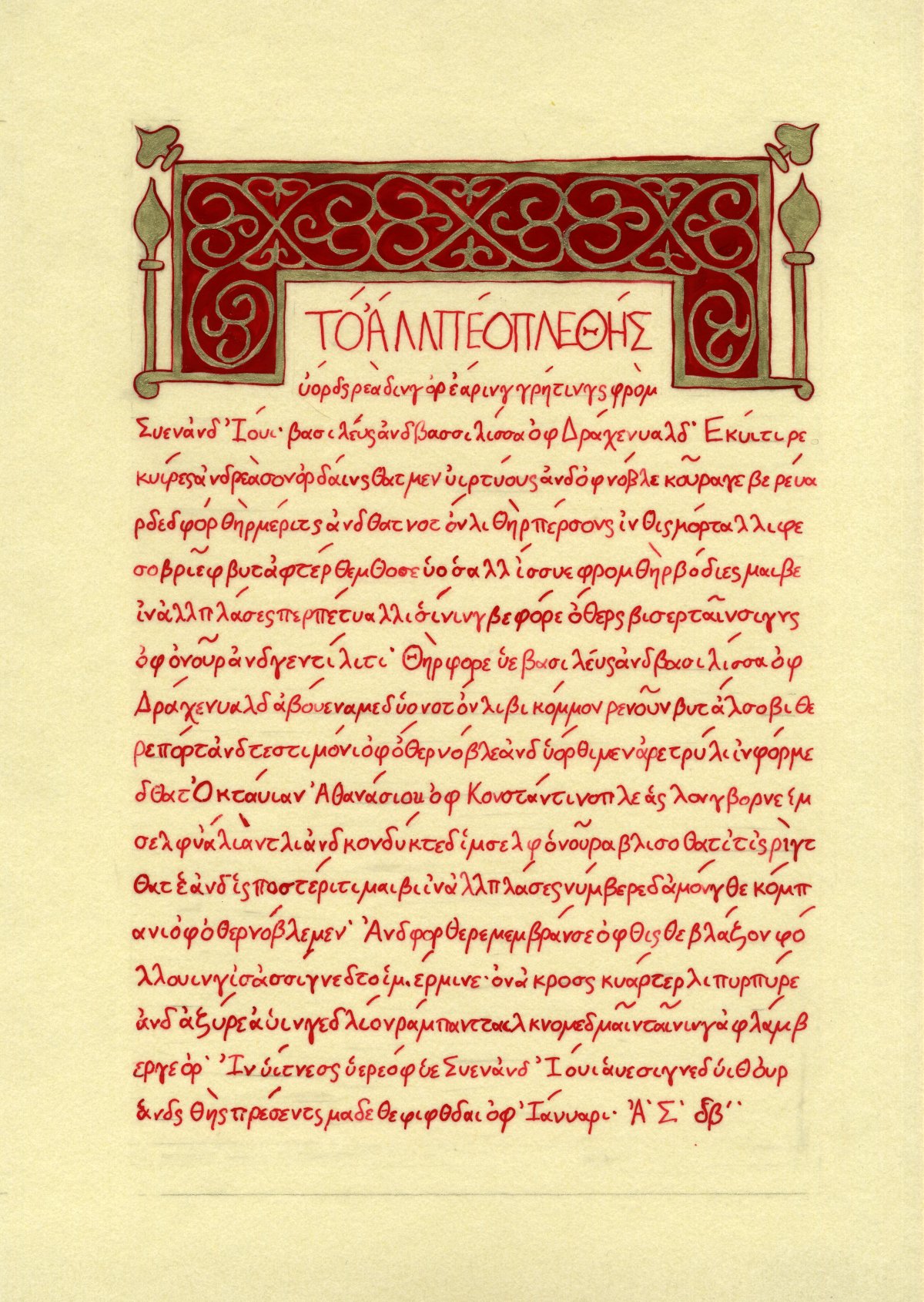
The scroll is based on folio 275r of MS Hunter 475 (V.7.2) in the University of Glasgow's Special Collections; it is from southern Italy/Sicily and dates from the mid-late 12th century.

original model
Gospel of John
finished scroll
Octavian

Text: The text has been transliterated into the Greek alphabet. It reads:

To all people reading or hearing these words greetings from Sven and Jovi, King and Queen of Drachenwald. Equity requires and reason ordains that men virtuous and of noble courage be rewarded for their merits and that not only their persons in this mortal life so brief but after them those who shall issue from their bodies may be in all places perpetually shining before others by certain signs of honour and gentility. Therefore we king and queen of Drachenwald abovenamed who not only by common renown but also by the report and testimony of other noble and worthy men are truly informed that Octavian Athanasiou of Constantinople has long borne himself valiantly and conducted himself honourably so that it is right that he and his posterity may be in all places numbered among the company of other noble men. And for the remembrance of this the blazon following assigned to him: ermine, on a cross quarterly purpure and azure a winged lion rampant tailed nowed maintaining a flamberge or. In witness whereof we Sven and Jovi have signed with our hands these presents made the fifth day of January, a.s. forty two.

The text has been transliterated (not translated) into Greek. Because it wasn't a translation, I had to fudge some of the letters -- 'w' and 'v' are represented by upsilon; when they occur initially, I gave the 'w' a rough breathing to indicate that it was a w. I use eta for 'ei' and the long e sound, because otherwise I wouldn't have had a reason to use it, and eta is a cool letter. For the accents, I made up my own system of accenting: monosyllabic words have no accent. Polysyllabic words got an acute accent on the syllable that gets the primary stress in English, except when that syllable had a diphthong with a falling tone (i.e., the ei in 'their'), in which case I gave it a grave accent. Other dipthongs (ie and ou) got circumflexes.

The punctuation system is that used by Aristophanes of Byzantium, who became librarian at Alexandria around 200 BC, according to "Punctuation in Greek and Latin to 1600". Since 'fifth' would've been spelled out as a word in English, I merely transliterated that, but for the year the award was given, I used the Greek system of numerals.

Paints: Talens gouache, gold and carmine.

Ink: Ecoline carmine.

The scroll was done on Jan. 24 and 25.


© 2009, Sara L. Uckelman.

Sunday, January 18, 2009

Lindquistringes for Katarina von Danzig

finished scroll
Katarina
original model
Codex San-Florianensis
Codex San-Florianensis III, 5, f.136v

Text: Carolingian miniscule, reading:

Unto all good and true citizens of Drachenwald these present letters seeing or hearing, greetings from Alaric and Nerissa, king and queen right well beloved. In recognition of the works that our dear subject Katarina von Danzig has rendered to us, our lands, and our lords, we hereby offer to her admission in our Orden des Lindquistringes, which confers the right to display the insignia of the order, a ring formed of a wingless dragon in annulo Or, maintaining with all four legs and mouth a gem gules. Dated at Flintheath, 13 of the month of October, a.s. 42.

Done Jan. 12, 17, and 18.

Paints: Talens gouache, gold, vermillion, carmine, black intenso, white, and ultramarine light. The pink is carmine + white, and the purple is carmine mixed with the already mixed ultramarine light + white, for the light blue bits.

Ink: Ecoline sepia and vermillion. The nib was a Mitchell 3.5 round.


© 2009, Sara L. Uckelman.
Tuesday, December 30, 2008

Lindquistringes for Barekr Bjorgeirsson

This is a backlog Lindquistringes.

Barekr

The text reads:

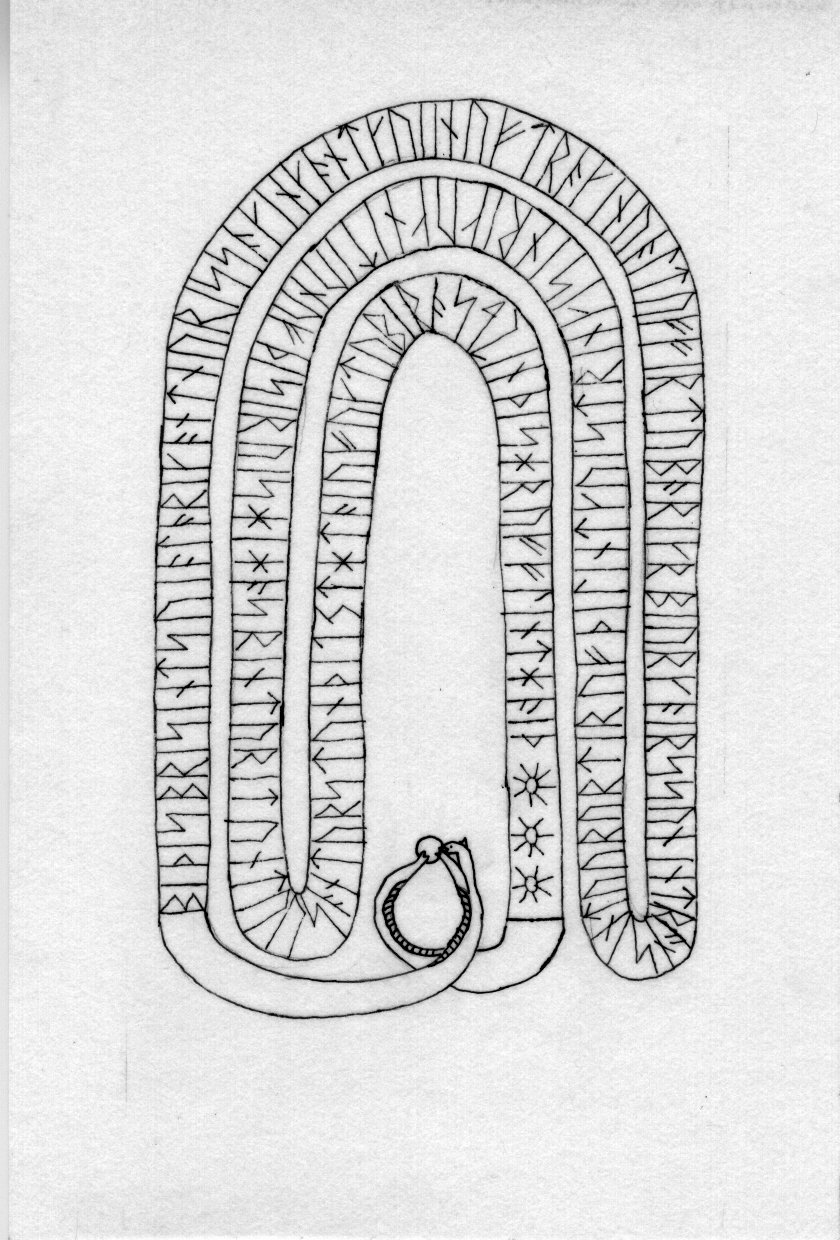
by these presents alaric and nerissa king and queen of drachenwald offer to barekr bjorgeirsson entrance into our order of the Lindquistringes in recognition of the service that he has rendered to us and ours done the 13th day of october, a.s. 42, in the shire of flintheath.

I transliterated this text into the Danish runes from ca. 900 AD at http://www.arild-hauge.com/edruner.htm. It's not a direct, letter to letter, transliteration, since this futhark has only 16 characters. However, if someone sat down with the image and the website, I think it should be possible to figure out from that alone what the original text was.

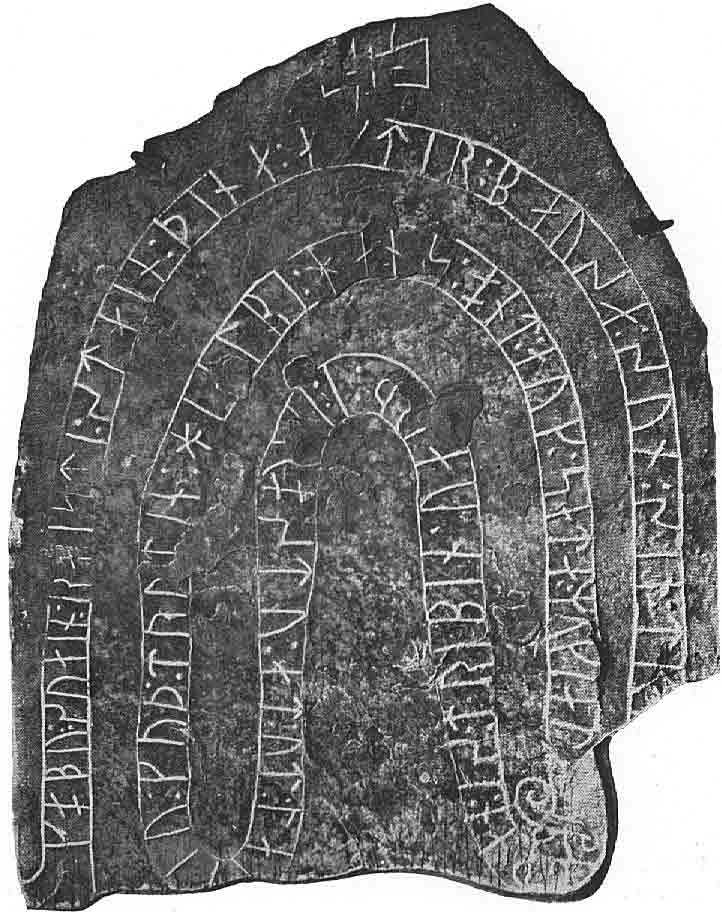
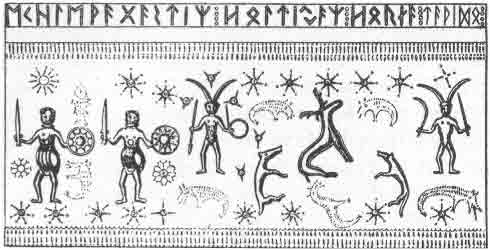
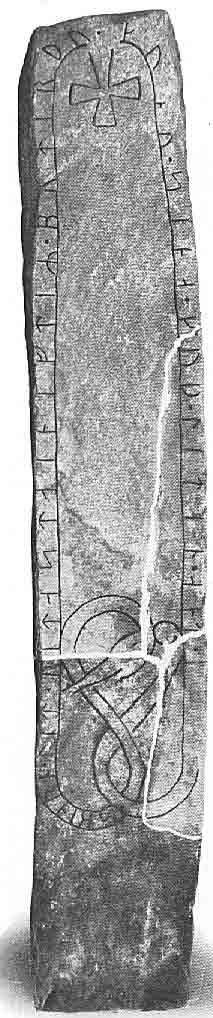
The image was designed to look like a rune stone, particularly the Bodilsker V Rune Stone, Bornholm, the Ny Larsker II Rune Stone, Bornholm, and the "stars" from the Gallehus Horn. The scroll was done Dec. 29 and 30.


© 2008, Sara L. Uckelman.

Sunday, December 21, 2008

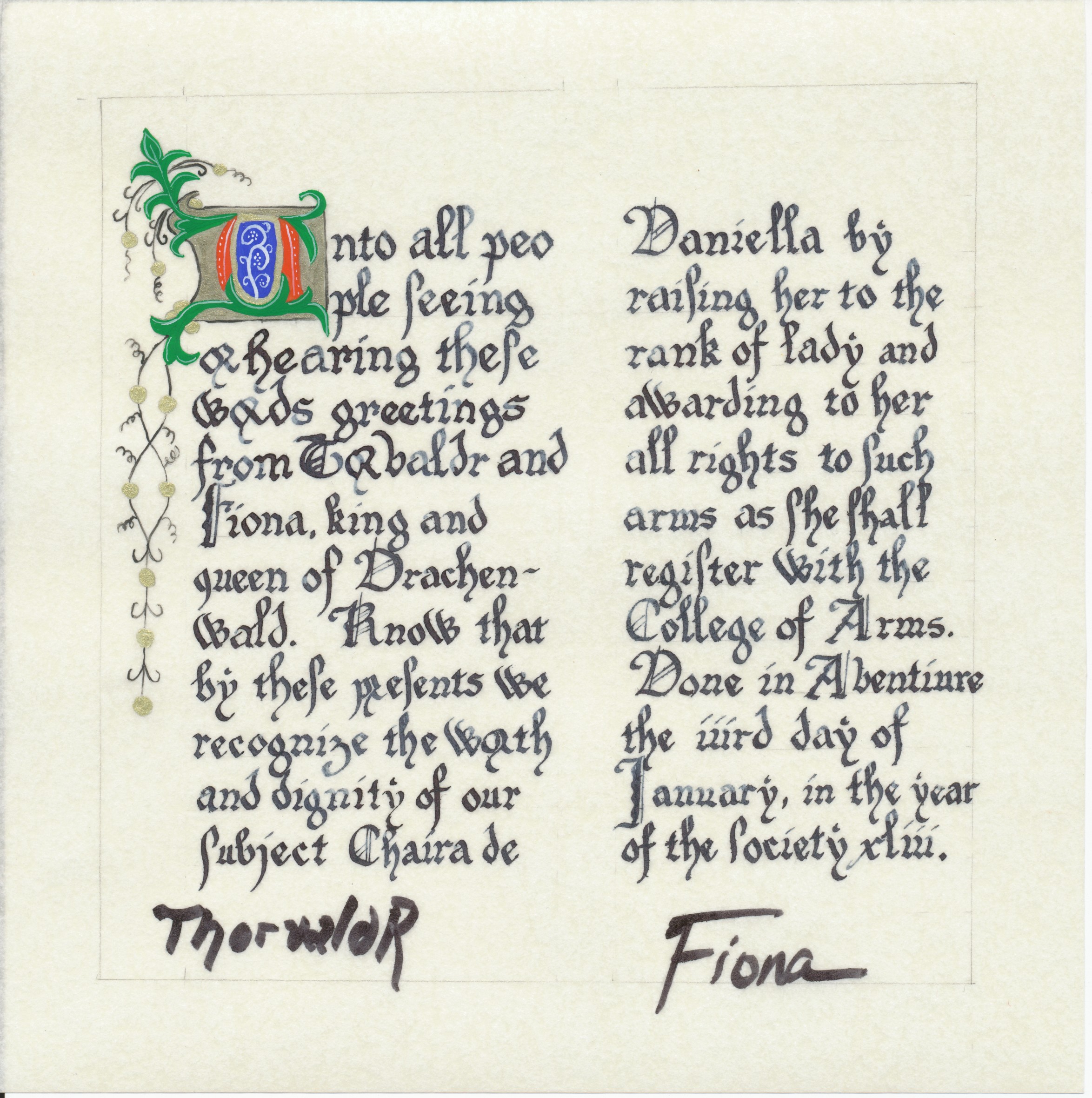
AoA

finished scrolloriginal model
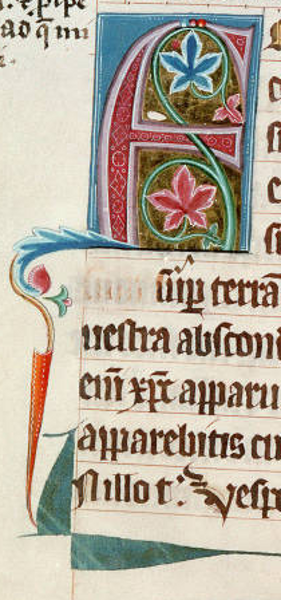
AoA Codex Mellicensis 461 f.171v

The name has been removed because on the day of the event that this was going to be given out at, it was realized that the recipient's name I'd been given was in fact getting a Lindquistringes, and someone else was getting an AoA, so the original recipient's name was going to be scraped out and the new recipient's name written in. Unfortunately, I never found out who the new recipient was!

This was not the best scan ever, as it doesn't quite represent the true colors of the original; the red is more pink and the orange less carrot-y in real life. This was my first time seriously attempting mixing colors, and what fun it was to see the results!

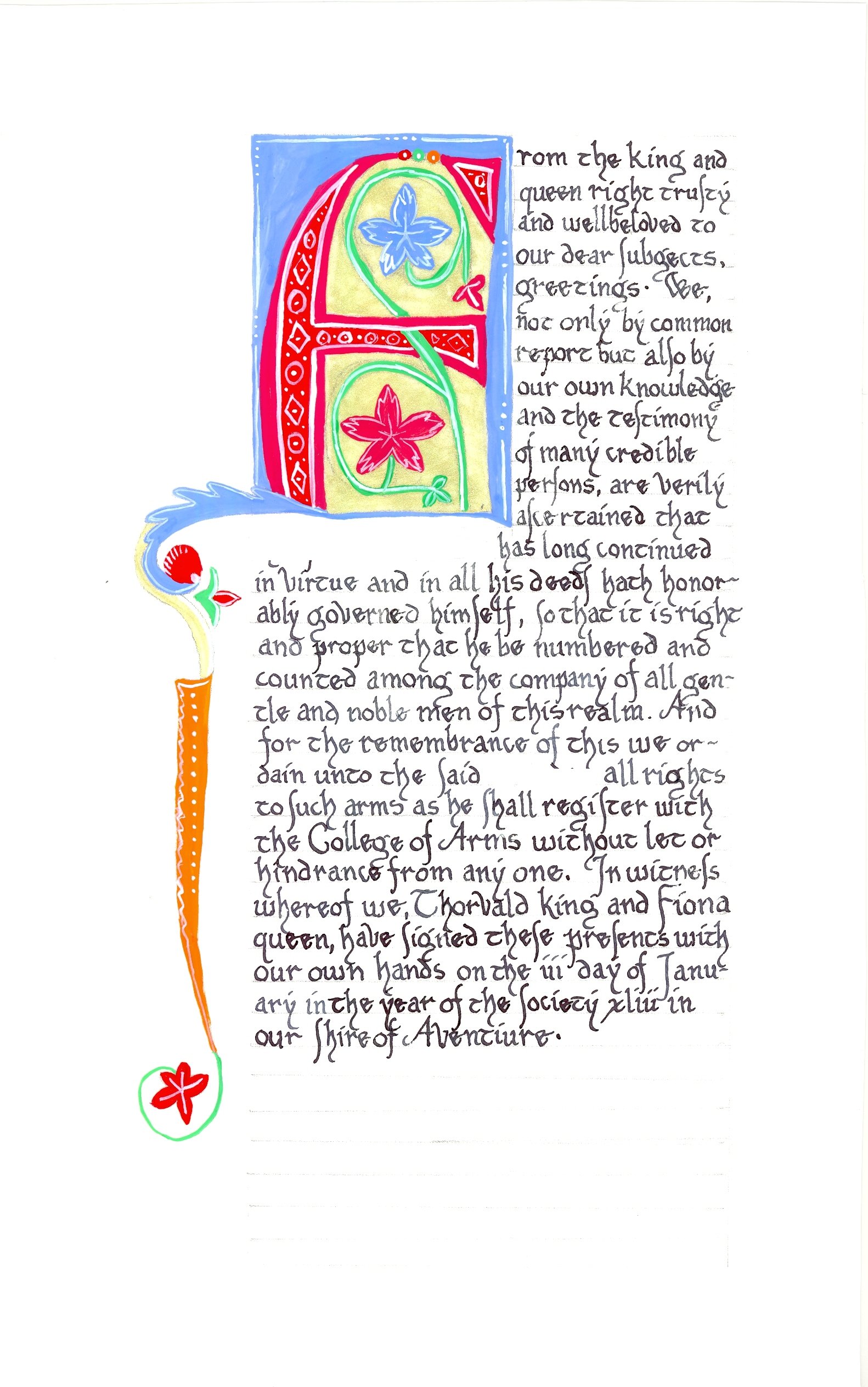
The text reads:

From the king and queen right trusty and well-beloved to our dear subjects, greetings. We, not only by common report, but also by our own knowledge and the testimony of many credible and noble persons, are verily ascertained that XXXX has long continued in virtue and in all his deeds hath honourably governed himself, so that it is right that he be numbered and counted among the company of all gentle and noble men of this realm. And for the remembrance of this we ordain unto the said XXX the right to bear such arms as he shall register with the College of Arms, without let or hindrance from any one. In witness whereof we, Thorvald king and Fiona queen, have signed these presents with our own hands on the iii day of January in the year of the society xliii in our Shire of Aventiure.

The illuminated letter is based on Codex Mellicensis 461 f. 171v.


© 2008, Sara L. Uckelman.

Saturday, December 20, 2008

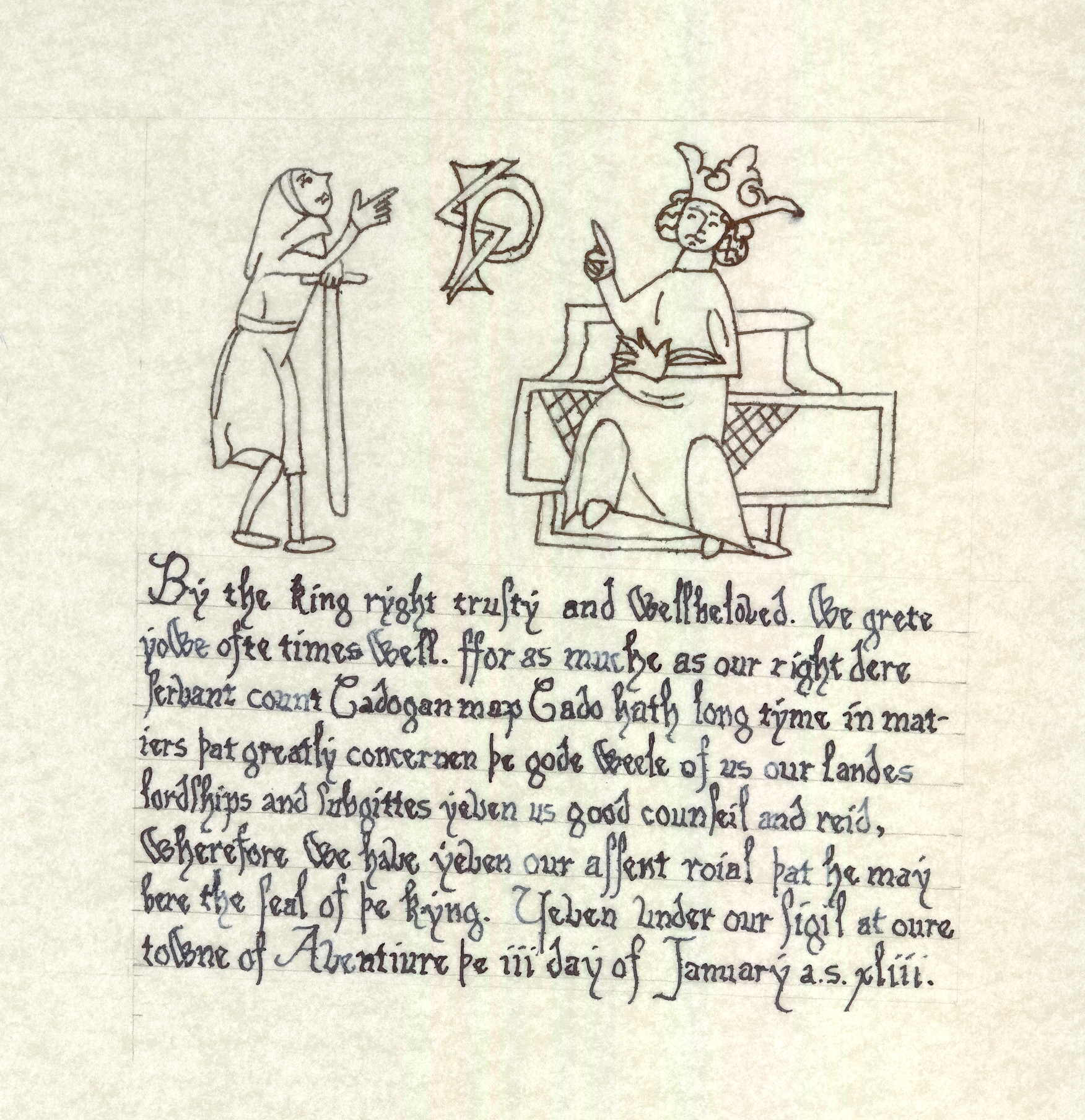
Sigillum regis for Cadogan map Cado

This is a sigillum rex, one of the "thank-you" awards given out usually once per reign.

Cadogan

The text reads:

By the king ryght trusty and welbeloued. We grete yow ofte tymes wel. ffor asmuche as our right dere servant count Cadogan map Cado hath long tyme in certain matiers þat greatly concernen þe gode weele of us our Landes lordships and subgittes yeuen us gode counseil and reid, wherefor we have yeuen our assent roial that he may bere þe seal of þe kyng. Yeuen vnder our sigil at oure town of Aventiure þe iii day of January, a.s. xliii.

It was cobled together from texts 1-20 at an anthology of chancery English.

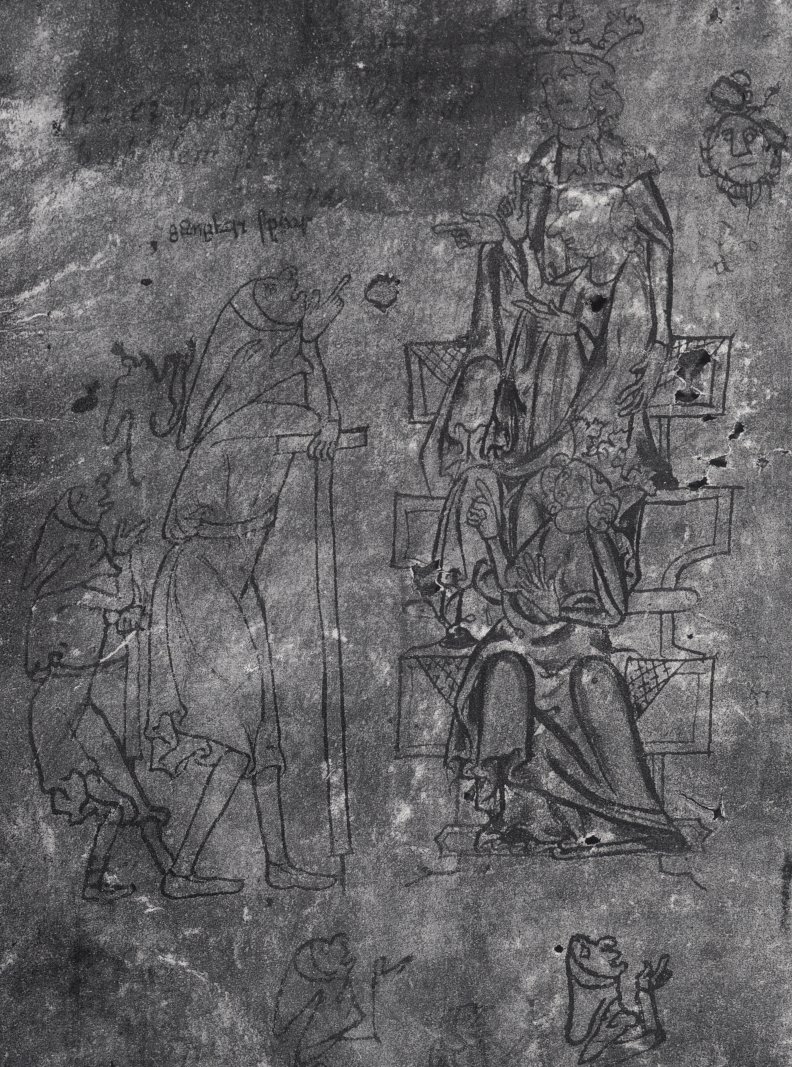
The drawings are based on one from the Snorra Edda (to acknowledge the Norse lineage of the King):

Snorra Edda

This is an image illustrating how King Gylfi of Sweden travelled to Asgard to seek the knowledge of the gods. It's from MS Delagarde 11, 14th C, on p. 24 of Jónas Kristjánsson, Handritaspegill, (Hið íslenska bókmenntafélag 1993).

The hand is an attempt at gothic littera bastarda. It passes the "arm's length" test, but that's about it.

© 2008, Sara L. Uckelman.

Sunday, December 7, 2008

AoA for Chiara de'Danielli

Chiara

The hand is my attempt at the gothic littera bastarda in Drogin, Medieval calligraphy: its history and technique. I keep thinking I must not have the right nib, because I've tried this hand many times and it never turns out how I want to to. This is probably the best I've done so far, but it's still a pretty poor imitation.

The design is modified from a manuscript which was pictured on the front cover of an advertisement for a conference on Johannes Duns Scotus:

Scotus

I don't have any further information about the manuscripts, except that it is probably a MS of one of Scotus's works, since he's pictured, and therefore it's also probably mid-14th C or later.

Unfortunately, when I was given the assignment, I was given the wrong spelling of the recipient's name.


© 2008, Sara L. Uckelman.

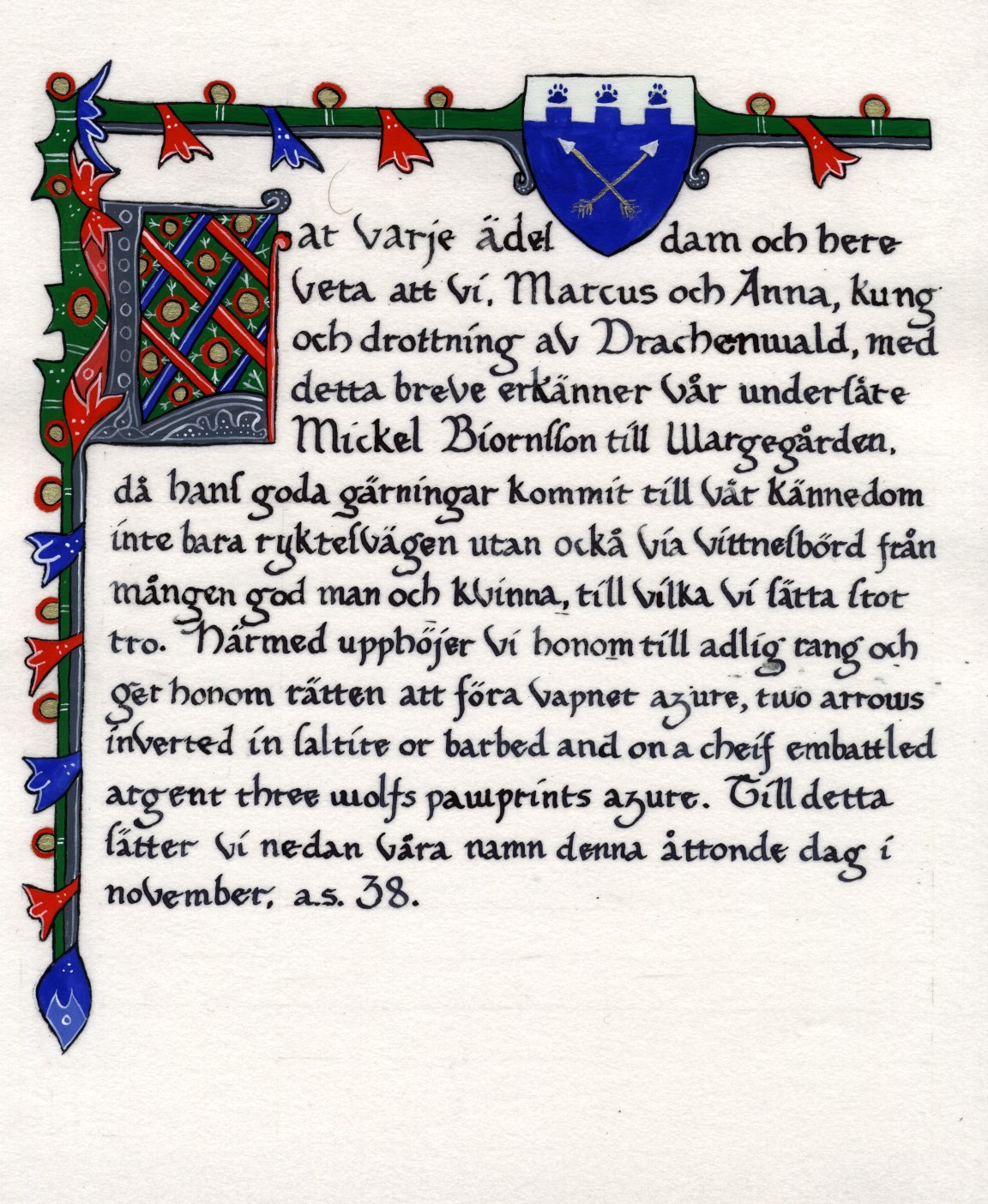
AoA for Mickel Biornsson till Wargegarden

This is a backlog AoA scroll:

Mickel

The text was translated into Swedish for me by Countess Elsa:

Låt varje ädel dam och here veta att vi, Marcus och Anna, kung och drottning av Drachenwald, med detta brev erkänner vår undersåte Mickel Biörnsson till Wargegården, då hans goda gärningar kommit till vår kännedom inte bara ryktesvägen utan också via vittnesbörd från mången god man och kvinna, till vilka vi sätta stor tro. Härmed upphöjer vi honom till adlig rang och ger honom rätten att föra vapnet azure, two arrows inverted in saltire or barbed and on a chief argent three wolf's pawprints azure. Till detta sätter vi nedan våra namn denna åttonde dag i november, anno societatis 38.

The text reads in translation:

Let every noble lady and lord know that we, Marcus and Anna, King and Queen of Drachenwald, with this letter recognize our subject Mickel Biörnsson till Wargegården, as his good deeds have come to our knowledge not only by rumour but also by the testimony of many good man and woman, in whom we put great trust. We hereby elevate him to noble rank and give him the right to carry the arms azure, two arrows inverted in saltire Or barbed and on a chief embattled argent three wolf's paw prints azure. To this we put our names this eighth day of November, a.s. 38.

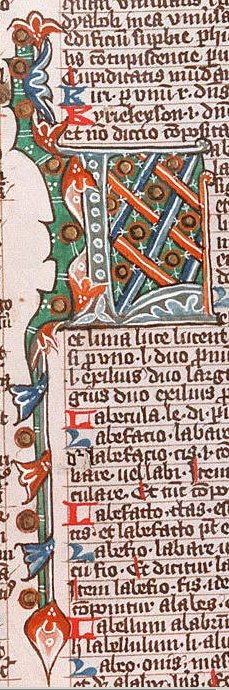
The initial was taken from Codex Claustroneoburgensis 136, f.30r, an early 15th C manuscript:

L

This was definitely at the very edge of my ability in terms of copying the design, modifying it to fit my space and layout, and to get the (very minor!) shading. The scroll was done over the course of Nov. 20, 22, 23, and Dec. 7.

Paints: Talens gouache, vermillion, green, ultramarine light, gold, white, and black intenso.


© 2008, Sara L. Uckelman.